
Wooden Driveway Gates: A Practical Guide to Double Gates
Driveway gates guide
What to think about before ordering a pair of wooden driveway gates: size, which way they open, what they hang from, slopes, planning rules and automation.

- 4.6 from 9 Google reviews
- 10+ years in property & joinery
- Free written quotes
In this guide
Why a pair of gates?
Most drives are too wide for a single gate to swing comfortably, so driveway gates are usually made as a pair that meet in the middle. Each leaf is half the width, so it is lighter, puts less strain on its hinges and post, and needs less room to swing. On a narrow drive you can also open one leaf for people and both for a car.
A pair of wooden gates makes a property more private, keeps children and dogs in, and finishes the front of a house in a way that suits both period and modern homes.
Sizes and proportions
Our driveway gates typically range from 3 to 6 feet high and 5 to 8 feet wide per gate. Lower gates mark the boundary and keep pets in while leaving the house visible from the road. Taller, close-boarded gates give more privacy and security but catch more wind, so they need stronger posts and hinges.
We measure the opening at the top, middle and bottom, because brick piers and old posts are rarely parallel, and make each leaf so the gaps look even when the gates are closed.
Planning new driveway gates? We will measure the entrance, check the posts and send a written quote.
Which way should they open?
Gates that open onto a road or pavement must open inwards, into your property. Under section 153 of the Highways Act 1980, a gate next to a street must not open outwards onto it, which also keeps the gates clear of pedestrians and traffic.
Opening inwards needs enough clear, level space behind each leaf. If the drive rises from the gate towards the house, a gate opening inwards can hit the ground part-way. The answers include cutting the bottom of each leaf to follow the slope, rising hinges, or making the gates shorter so they clear it.
Posts, piers and hinges
-
Timber posts
Heavy-section timber posts set deep in concrete are the usual choice. We fit new or replacement posts where the old ones are rotten or loose.
-
Brick piers
Gates can hang from brick piers with fixings built in or drilled in, provided the piers are sound and tall enough.
-
Hinges
Long strap hinges or adjustable heavy-duty hinges carry the weight. Adjustment lets the gates be re-aligned if they settle.
-
Drop bolts
A bolt on each leaf drops into a socket in the drive to hold the gates shut and stop them being pushed open.
-
Centre stop
A stop in the middle of the drive gives the leaves something to close against, which takes strain off the bolts and latch.
-
Holding open
Gate stops or hooks hold each leaf open so it does not swing shut in the wind onto a car.
How they are built
Driveway gates are almost always framed, ledged and braced, with boarding fixed into a full frame and diagonal braces rising from the hinge side so the weight is carried back to the hinges. Because of their size, parts are often made or finished on site, and fitting usually takes a day or two depending on the design.
The timber matters: oak and iroko are long-lasting, cedar keeps the weight down, and Accoya is the most stable. Our guide to the best woods for gates compares them.
-
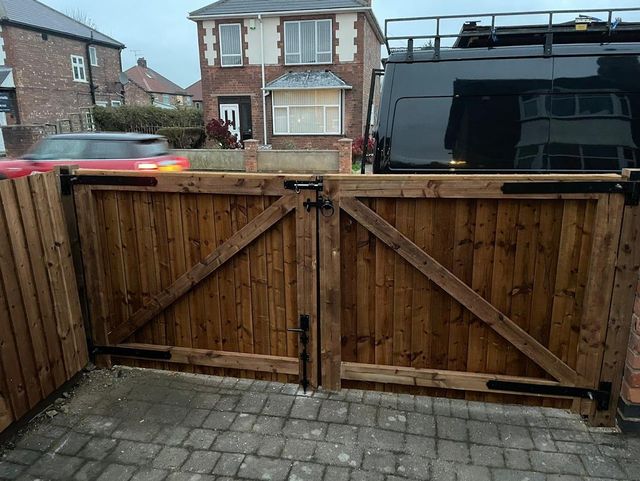
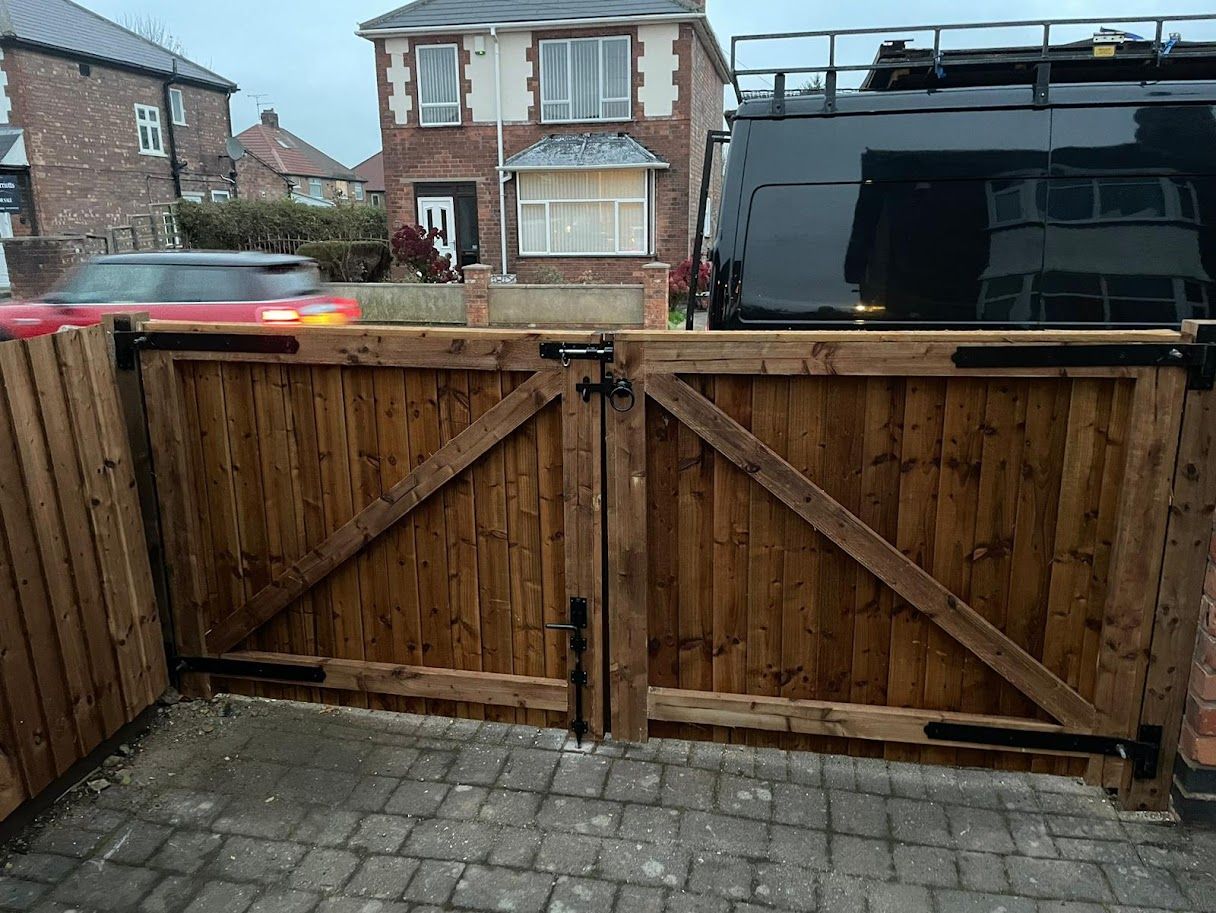
A pair of stained driveway gates -
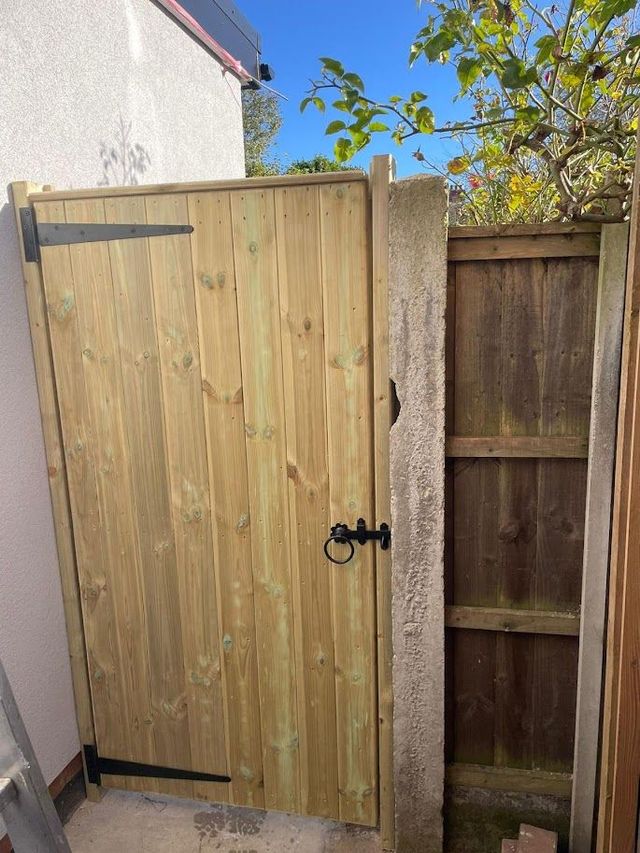
Ledged and braced boarding -
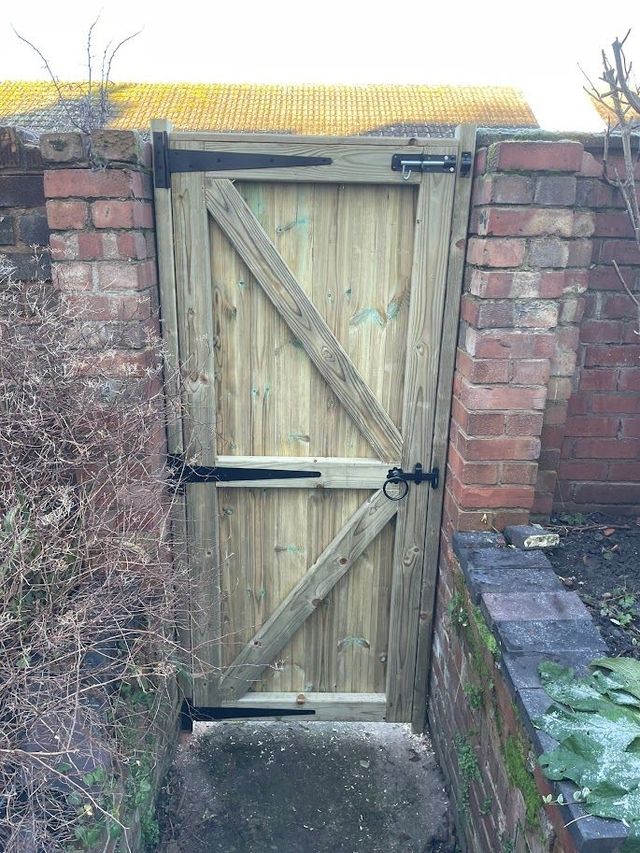
Braces rising from the hinge side
Do you need planning permission?
In England, gates up to 1 metre high next to a road used by vehicles, or up to 2 metres high elsewhere, can normally be put up without planning permission. Higher than that, or if the house is a listed building or the rules have been restricted in your area, you may need permission. If in doubt, check with your local council before ordering.
Getting ready for automation
If you might add electric openers now or later, tell us at the survey. A few details change to suit a motor: the gates need to be stable and well braced, the posts or piers strong enough for the arms, and space left for the motor brackets and cables. Building that in from the start costs far less than altering the gates later.
Driveway gate questions
How wide can wooden driveway gates be?
Our driveway gates typically range from 5 to 8 feet wide per gate, so a pair covers most drives. Wider openings are possible with the right posts, hinges and construction.
Should driveway gates open in or out?
If they open onto a road or pavement, they must open inwards. Under section 153 of the Highways Act 1980, a gate next to a street must not open outwards onto it.
Do I need planning permission for driveway gates?
In England, gates up to 1 metre high next to a road, or up to 2 metres elsewhere, normally do not need planning permission. Listed buildings and some areas have extra controls, so check with your council if you are unsure.
Can wooden gates be automated?
Yes. Tell us at the survey if you are planning automation, so the gates, posts and fixings are built to suit a motor.
How long does it take to fit driveway gates?
Usually a day or two, depending on the design, because parts of the gates are often made or finished on site.
Keep reading
More on wooden gates
Get a quote for driveway gates
WhatsApp us a photo of the entrance, call 01332 215505 or send an enquiry. We will come and measure up, check the posts or piers, and send a written quote.


