
Wooden Garden Gates: A Practical Guide to Side and Back Gates
Garden gates guide
How to choose a wooden garden or side gate that looks right, closes properly and keeps the garden secure, from the style and size to the latch and the posts.

- 4.6 from 9 Google reviews
- 10+ years in property & joinery
- Free written quotes
In this guide
What a new garden gate costs
- Garden or side gate, supplied and fitted: typically £350–£500
- New posts or hardwood gates: priced on survey
The price moves with the design, the wood and the work involved in hanging it. A gate on sound existing posts is the simplest job; new posts, a shaped top or a sloping path add to it.
Garden gate styles
-
Ledged and braced
Vertical tongue and groove boarding held by three rails and two diagonals. Solid, private, and the side gate most people choose.
-
Framed and braced
Boarding fixed inside a jointed perimeter frame. Stiffer and heavier, so it suits taller gates and wider gaps.
-
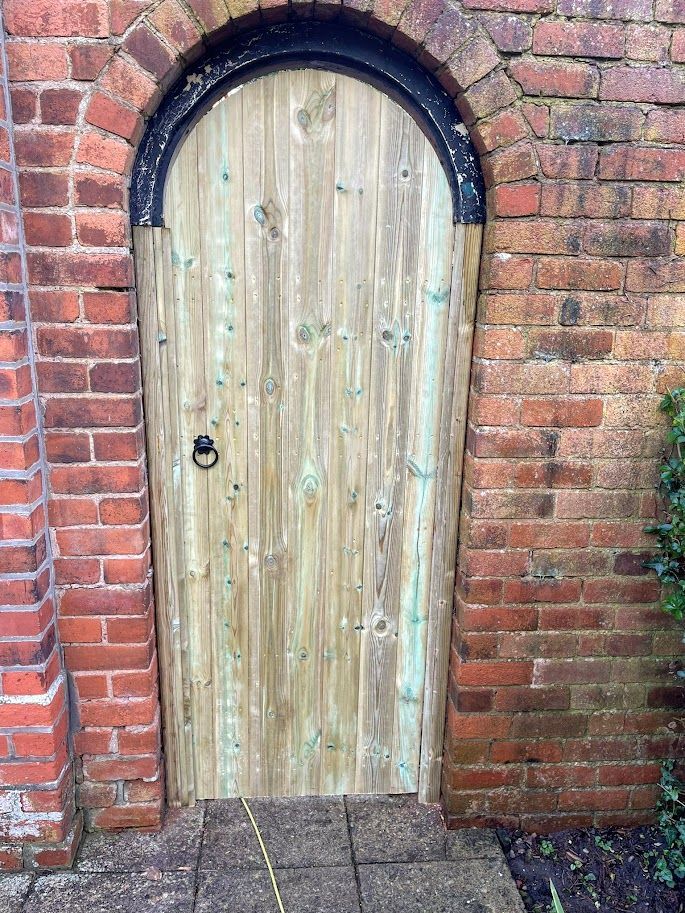
Arched top
Shaped to fit a brick archway, or with a curved top as a feature on a straight opening.
-
Picket
Spaced vertical boards for a front garden, marking the boundary without hiding the house.
-
Slatted
Evenly spaced horizontal or vertical slats for a modern look that still lets air and light through.
-
Half and half
A solid lower half with a slatted or trellis top, for privacy without a solid wall of timber.
Getting the size right
The most popular back garden gate is tongue and groove, around 6 feet high by 3 feet wide. That height gives privacy and makes a side gate hard to climb, and the width lets a wheelie bin or a mower through.
We measure the opening at the top, middle and bottom. Side passages are often wider at one end than the other, and walls lean, so the gate is made to look even in the gap rather than to a standard size. Leave a clear gap at the bottom so the gate clears the path and does not sit in the wet.
-
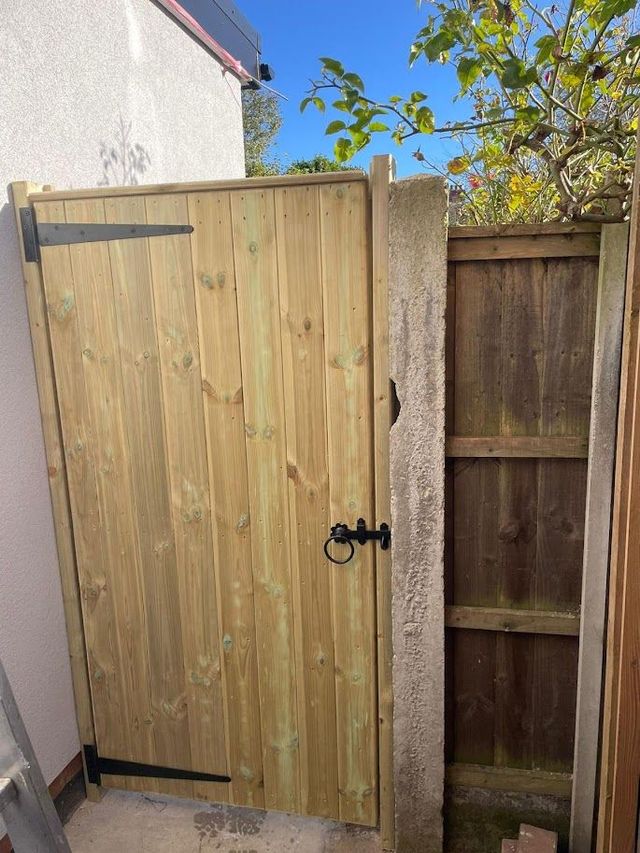
A 6 ft tongue and groove side gate -
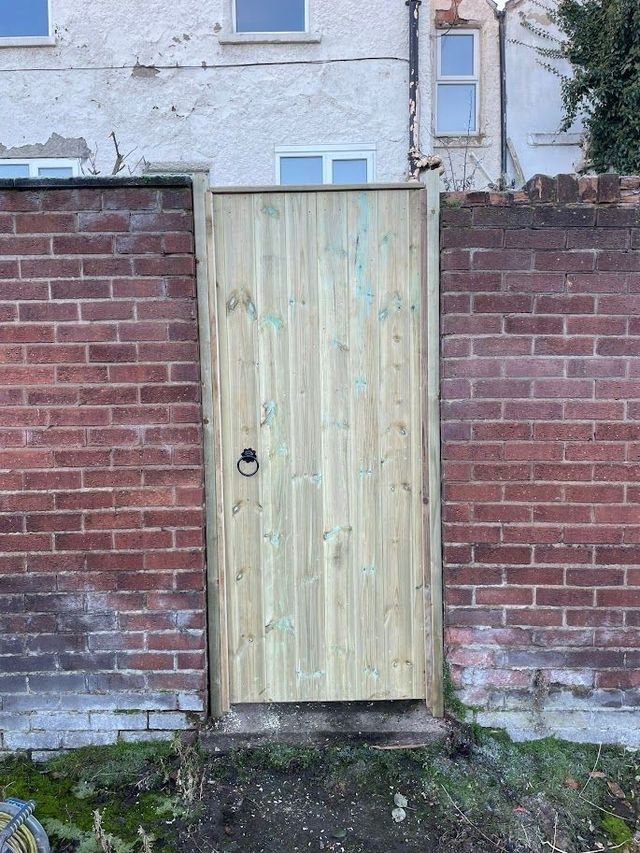
Made to fit the gap between two walls -
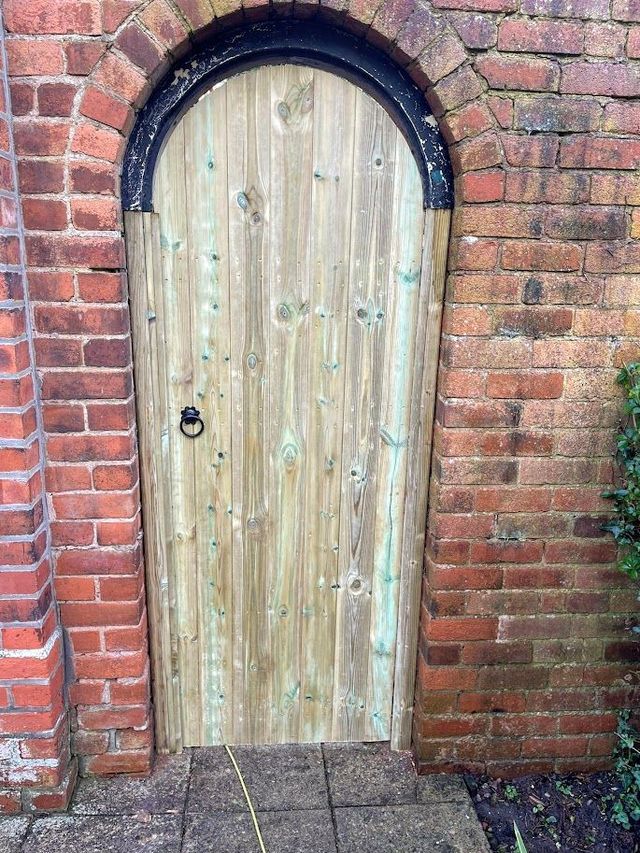
Shaped to an existing archway
Need a new garden gate? Send us a photo of the gateway and we will arrange a visit to price it up.
Hinges, latches and locks
-
Strap and T hinges
Long hinges spread the weight along the ledges. Heavier gates need heavier hinges, and three on a tall gate.
-
Ring and thumb latches
Traditional latches that open from both sides, ideal for back gates used every day.
-
Gravity latches
Close themselves when the gate swings shut, which is handy with children and pets.
-
Bolts
Barrel or tower bolts on the inside lock the gate from the garden side.
-
Locks
A rim lock or a lockable latch lets you open the gate with a key from outside.
-
Gate closers
A spring or hydraulic closer pulls the gate shut behind you, so it is never left open.
Making a side gate secure
- Keep it tall: a 6 ft gate is much harder to climb than a low one.
- Put the ledges and braces on the garden side, so there is nothing to use as a step from the outside.
- Bolt it from the inside at the top and bottom, or fit a lock you can open with a key.
- Use security screws or coach bolts for the hinges, so they cannot be undone from outside.
- Hang it on sound posts. A loose post makes the best lock useless.
Posts, walls and sloping paths
A gate is only as good as what it hangs from. When a post rots at ground level or works loose, the gate sags, catches the path and the latch stops lining up. We swap tired posts for new ones while we are there, or fix the gate to brickwork with anchors suited to the wall.
If the path rises through the gateway, a straight-bottomed gate will drag. Shaping the bottom edge to match the ground, or hanging the gate to swing downhill, solves it.
Looking after a wooden gate
Treated softwood gates can be left to weather, or stained or painted once the timber has dried out. Check the hinges and latch once a year, tighten anything that has worked loose, keep soil and leaves away from the bottom of the gate, and re-coat any finish before it wears through. Our guide to the best woods for gates covers the timber choices and finishes in more detail.
Garden gate questions
What does a wooden side gate cost?
Typically £350 to £500 made and hung, with the design, the wood and the work involved deciding where in that range it lands. Hardwood gates and new posts are quoted once we have seen the gateway.
What size is a standard garden gate?
There is no single standard, but the most popular back garden gate is around 6 feet high by 3 feet wide. We make each gate to fit the opening.
How long does hanging a garden gate take?
On good posts, a gate that has already been made is usually up within a morning. Setting new posts adds time, because the concrete needs to firm up.
My gate post is rotten. Can you sort that too?
Yes. Replacing tired or rotten posts is a normal part of hanging a new gate, and we will tell you at the visit whether yours need it.
Which side should the ledges and braces go?
On the inside, or garden side. That makes the gate harder to climb from outside, and the braces should rise from the hinge side to carry the weight.
Keep reading
More on wooden gates
Price up a new garden gate
The quickest start is a photo of the gateway on WhatsApp. You can also ring 01332 215505 or use the enquiry form, and we will come out to measure.


