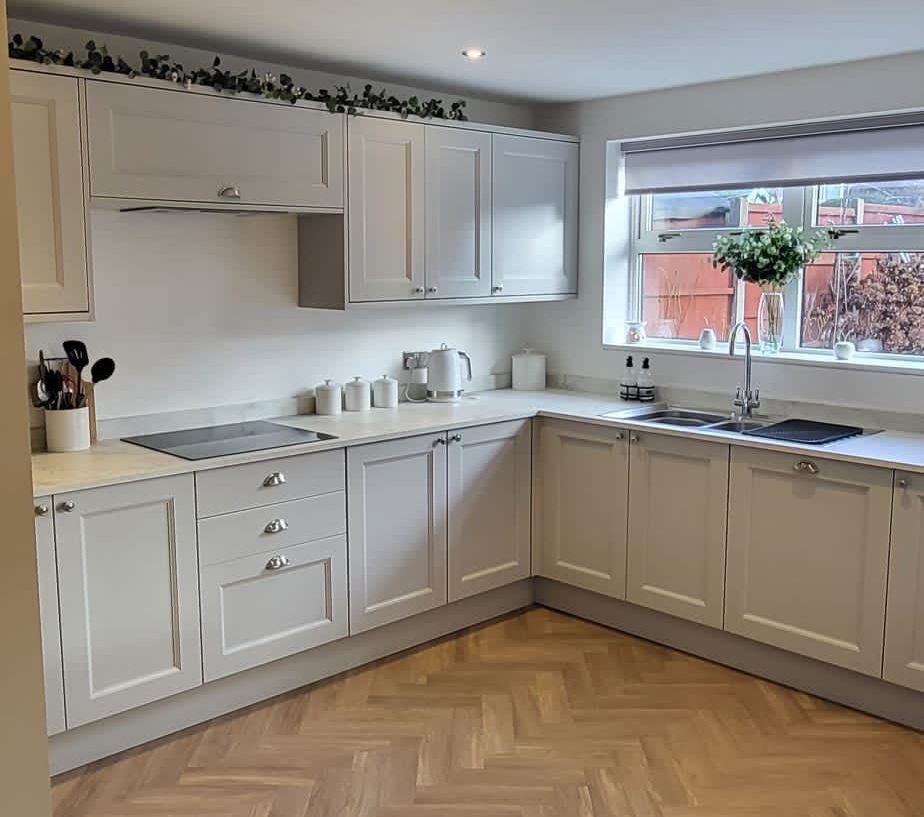
Kitchen Layout Planning: Choosing the Right Configuration for Your Derby Home

DERBYSHIRE JOINERY SPECIALISTS HELPING YOU PLAN YOUR KITCHEN LAYOUT ACROSS DERBYSHIRE

kitchen finance options
01332 215505

GET A QUICK FREE KITCHEN PLANNING QUOTE

SEND 24/7

Kitchen Planning enquiry

PLANNING YOUR KITCHEN LAYOUT

Your kitchen layout is the single most important decision you'll make during a kitchen renovation. Unlike cabinet colours, worktop materials or handle styles – all of which can be changed relatively easily if you change your mind – your layout is essentially permanent once installed. Move the sink to a different wall three years later and you're looking at substantial replumbing costs. Reposition your hob after installation and you're into electrical rewiring territory.

This decision matters because it fundamentally shapes how your kitchen functions for the next fifteen to twenty years. A well-planned layout creates efficient workflow, reduces wasted movement, accommodates your cooking style, and makes meal preparation genuinely enjoyable. A poorly planned layout creates daily frustration: you'll walk unnecessary steps between fridge and preparation area, struggle with insufficient worktop space beside your hob, or find two people can't work simultaneously without constant navigation around each other.

The most common mistake we see is homeowners copying layouts that look impressive in magazines or showrooms without considering whether those configurations actually suit their specific space, cooking habits, or family dynamics. An island kitchen looks wonderful in a glossy brochure, but needs a minimum of fifteen square metres to function properly. Force one into a twelve square metre space and you've created an expensive obstacle rather than an asset.

We've designed and installed hundreds of kitchen layouts across Derby and Derbyshire over the years. Patterns emerge from this experience: Victorian terraces with their long, narrow proportions suit different configurations than 1930s semis with squarer dimensions. Families who entertain regularly need different layouts than couples who cook occasionally. Keen bakers require more continuous worktop space than households relying on ready meals.

We how his guide provides a structured framework for helping you choose the layout that suits your circumstances. We'll explain the fundamental principles that make any kitchen work efficiently, detail the five main configuration options with honest pros and cons for each, and help you match layout choices to your actual lifestyle rather than aspirational cooking habits you might not realistically maintain.

If you'd like professional input on your specific space, call us on 01332 215505 for a free consultation. We'll measure accurately, discuss how you use your kitchen, and present layout options tailored to your property and budget.

KITCHEN PLANNERS NEAR ME

If you live in Derby or further afield in Derbyshire we bring our service to you. So if you are looking for kitchen planners near me, we're ideal!

UNDERSTANDING THE KITCHEN WORK TRIANGLE

Before examining specific layout configurations, you need to understand the fundamental design principle that underpins efficient kitchen workflow: the work triangle.

What Is the Work Triangle and Why It Still Matters

The kitchen work triangle was developed in the 1940s by researchers studying efficient kitchen design, and despite being over seventy years old, the principle remains fundamentally sound. The concept positions your three most-used kitchen elements – sink, hob and fridge – at the points of a triangle, creating natural, efficient movement between the three key activities: food storage, preparation and cooking.

The ideal work triangle has specific dimensional parameters. Each side of the triangle should measure between 1.2 metres and 2.7 metres, with the total perimeter falling between 4 metres and 8 metres. These measurements aren't arbitrary – they're based on ergonomic studies of how people naturally move when cooking. Too small and you feel cramped with insufficient worktop space between zones. Too large and you're walking unnecessary distances carrying hot pans or armfuls of ingredients.

The logic is straightforward: you collect ingredients from the fridge, move to the sink area for washing and preparation, then transfer to the hob for cooking. An efficient triangle means these transitions happen naturally within a few steps, without crossing your own path or retracing routes. You're not walking halfway across the kitchen carrying a colander of washed vegetables, and you're not stretching across the hob to reach the sink when you need to drain pasta.

In practical terms, this means positioning these three elements thoughtfully rather than placing them wherever they happen to fit. The sink doesn't necessarily need to sit beneath the window just because that's traditional. Your fridge shouldn't be positioned across the room from your preparation area simply because that's where space exists. Each placement decision affects workflow efficiency.

When the Work Triangle Doesn't Apply

The work triangle remains useful guidance, but modern kitchens don't always conform to 1940s design assumptions. Several scenarios make the traditional triangle less relevant or require adaptation.

Open-plan kitchens with multiple cooks operating simultaneously need multiple work zones rather than a single triangle. If two people regularly cook together, a rigid triangle creates conflict points where you're constantly navigating around each other. Better to create separate task zones – perhaps one person working the hob and oven whilst another handles preparation at an island or peninsula.

Large kitchen islands fundamentally disrupt the traditional triangle by creating a central work zone that becomes its own preparation and cooking area. If your island contains a hob or sink, you're effectively creating multiple triangles or abandoning the triangle concept entirely in favour of zone-based thinking.

Very small kitchens – common in Derby's compact Victorian terraces – sometimes make the triangle concept meaningless. When your entire kitchen measures 2.5 metres by 3 metres, everything sits within easy reach regardless of configuration. The triangle becomes more of a line or tight cluster, which works perfectly well for the space available.

Modern kitchens sometimes include multiple sinks (main preparation sink plus bar sink), multiple cooking surfaces (main hob plus separate induction plate), or substantial pantry storage that functions like a second fridge. These additions create complexity that the simple triangle doesn't address.

In these scenarios, zone-based thinking works better: create a preparation zone with sink, worktop space and knife storage; a cooking zone with hob, oven and pan storage; a cleaning zone with dishwasher and bin. Position these zones logically relative to each other even if they don't form a neat triangle.

Adapting the Work Triangle to Derby Properties

Derby's varied housing stock presents particular constraints that affect how the work triangle can be implemented. Understanding these limitations helps set realistic expectations.

Victorian and Edwardian terraced properties – which constitute a substantial proportion of Derby's housing in areas like Normanton, Chaddesden and the Arboretum – typically feature long, narrow kitchens with windows at the rear and doorways at the front. This configuration often dictates sink positioning beneath the window (maximizing natural light for food preparation) and forces a more linear arrangement where the triangle becomes elongated rather than equilateral.

Existing plumbing locations create significant constraints in older properties. The waste pipe from your sink typically exits through the rear wall near where Victorian builders originally positioned it. Moving your sink to a different wall means routing waste pipes across the room, which requires raising floor levels to create sufficient fall for drainage or running pipework beneath floorboards. This adds £800-£1,500 to project costs depending on distances involved. Many Derby homeowners reasonably decide to keep the sink in its existing location and plan the triangle around this fixed point.

Long narrow spaces – typical in terraced houses – create triangles that feel more like lines. Your fridge might sit at one end, sink in the middle, hob at the far end, creating a 6-metre line rather than a compact triangle. This works adequately if you're the sole cook, but becomes awkward when two people need to work simultaneously as you're constantly passing each other in the corridor.

Properties where kitchens have been extended or reconfigured offer more flexibility. Modern extensions with multiple external walls and no historic plumbing constraints allow positioning elements to create optimal triangles. If you're planning a kitchen extension, this is your opportunity to position waste pipes, gas supply and electrical circuits precisely where they best serve efficient layout rather than accepting inherited constraints.

The practical takeaway is straightforward: use the work triangle as guidance for efficient positioning, but don't force compliance if your property's specific constraints make it impractical or prohibitively expensive.

THE FIVE MAIN KITCHEN LAYOUT CONFIGURATIONS

Every kitchen layout falls into one of five basic configurations, each with distinct characteristics, advantages and limitations. Understanding these options helps you identify which suits your space, budget and lifestyle.

Single Wall/Straight Line Layout

A single wall layout positions all your appliances, units and worktop along one straight wall, creating the most compact and space-efficient configuration possible.

This layout works best for very small kitchens under 3 metres in length – typical in studio flats, compact city centre apartments, or granny annexes where cooking facilities need to fit into minimal space. Everything you need sits along one wall, leaving the rest of the room free for dining, living or whatever the space serves.

The work triangle becomes essentially linear in this configuration. You move along the wall from fridge to sink to hob rather than between distinct points. This works adequately for light cooking – heating ready meals, making breakfast, preparing simple lunches – but becomes limiting if you cook elaborate meals regularly.

Advantages include extreme space efficiency (uses only one wall, leaving maximum floor space open), simple and affordable installation (one continuous run of units with no corners to solve), and suitability for minimal cooking lifestyles. If you eat out frequently or rely heavily on convenience foods, a single wall provides everything you need without consuming valuable floor space.

Disadvantages are significant for anyone who cooks seriously. You have very limited worktop and storage space constrained to one wall's length. Workflow suffers because everything is strung out linearly – collect something from the fridge at one end, carry it to the sink in the middle, then back to the hob at the far end. Multiple cooks operating simultaneously is virtually impossible as you're both working the same narrow strip. If the wall length exceeds 4 metres, distances between key areas become inefficiently long.

In Derby, we install single wall kitchens primarily in city centre flat conversions, bedsit properties, and compact annexes where space is severely limited. They're a pragmatic solution for constrained circumstances rather than an optimal choice for serious cooking. For more comprehensive guidance on working with limited space, read our guide to small kitchen design options.

Realistic dimensions range from 2.5 metres (absolute minimum to fit hob, sink and under-counter fridge) to 4 metres (beyond which the layout becomes stretched and inefficient). This configuration suits single occupants, couples who eat out frequently, students, or anyone whose cooking rarely extends beyond basic meal preparation.

Galley/Corridor Layout (Two Parallel Walls)

Galley kitchens feature units on two facing walls, creating a corridor-style workspace. This is the most common configuration in Derby's Victorian and Edwardian terraced properties where kitchens are typically long, narrow rectangular rooms measuring 2.2 metres to 2.8 metres in width.

The work triangle in a galley layout becomes highly compact and efficient. Position your sink and preparation area on one wall, hob and oven on the opposite wall, with the fridge at either end. Everything sits within a single turn – you're never more than 1.5 metres from any task, which creates remarkably efficient workflow once you establish your rhythm.

Advantages make galleys popular despite their narrow proportions. Workflow efficiency is excellent – everything is genuinely within arm's reach or a single step away. You maximize storage potential for the footprint, utilizing both walls fully. There's a natural division of tasks with wet preparation on one side and cooking on the other. Installation costs remain moderate as you're working with two straight runs without complex corners to accommodate.

The layout works particularly well for households with one primary cook who prepares most meals. That person develops muscle memory for the space – knows exactly where everything sits, can work efficiently without thinking, and rarely wastes movement.

Disadvantages centre on space constraints. If the clearance between opposing units falls below 1.2 metres, the kitchen feels genuinely cramped and appliance doors (particularly oven doors swinging open) can obstruct the passage. Worktop space is limited to whatever length the two walls provide. Two people cooking simultaneously requires coordination and patience as you're constantly navigating around each other in the corridor.

Traffic flow becomes problematic if your galley kitchen serves as the thoroughfare between living spaces and garden. In many Derby terraced houses, the kitchen connects the front living room to the rear yard, meaning family members and pets constantly traverse your workspace. This disrupts cooking and creates safety concerns when carrying hot pans or sharp knives.

The critical measurement in galley design is the clearance between opposing base unit runs. Minimum acceptable clearance is 1.2 metres – enough for appliance doors to open fully and one person to work comfortably. Ideal clearance is 1.4 metres to 1.6 metres, providing enough room for two people to pass without uncomfortable squeezing. Beyond 1.8 metres, you start wasting steps between the two walls and might consider an L-shaped configuration instead.

Derby applications are predominantly Victorian and Edwardian terraced properties in Normanton, Chaddesden, Littleover and similar areas where original kitchen proportions were narrow rectangular rooms. These properties were built when kitchens were purely functional spaces rather than social hubs, resulting in dimensions that suit galley layouts naturally.

This configuration suits one or two primary cooks in households where kitchen activity is focused on meal preparation rather than entertaining or socializing. If your lifestyle involves everyone gathering in the kitchen while cooking happens, a galley's narrow corridor won't accommodate that comfortably.

As experienced kitchen installers in Derby, we fit galley layouts regularly in Victorian and Edwardian terraced properties where this configuration naturally suits the room proportions.

L-Shaped Layout (Two Adjacent Walls)

L-shaped layouts run units along two perpendicular walls, creating the most versatile configuration that suits the widest range of room shapes and cooking styles.

This layout works best for square or slightly rectangular rooms – typical in 1930s semi-detached properties throughout Mickleover, Mackworth and Allenton where kitchens measure roughly 3 metres by 3.5 metres or similar proportions. The L-configuration adapts well to varied dimensions, making it the default choice when room shape allows.

The work triangle forms naturally across the two walls. Position your sink on one leg of the L, your hob on the other leg, and your fridge at the junction or end point. This creates a genuine triangle with reasonable distances between points rather than the linear arrangement of galley layouts.

Advantages are substantial and explain why L-shapes are so popular. The configuration is genuinely versatile, accommodating rooms from relatively compact (2.5m x 2.8m) through to generous proportions. It opens up floor space in the centre of the room, typically leaving enough area to accommodate a small dining table or to add a breakfast bar peninsula. The corner provides good storage capacity when fitted with appropriate mechanisms rather than traditional awkward cupboards. Social cooking becomes comfortable – you can interact with family or guests in the dining area whilst preparing food. Two cooks can work simultaneously without constant collision, one taking each leg of the L.

The layout particularly suits families wanting to keep a table in the kitchen for everyday meals, homework or social gathering while cooking happens. It balances efficient workspace with social functionality better than any other configuration.

Disadvantages focus primarily on the corner where the two runs meet. Specified poorly, corner base units become dark, deep cupboards where items disappear into inaccessible rear corners. Your Tupperware collection migrates to the back, and retrieving anything requires kneeling down and reaching awkwardly into the depths. This wastes potentially valuable storage.

The solution lies in proper corner mechanisms. Magic corners feature pull-out shelving that brings items from the rear forward to the cabinet front. LeMans mechanisms swing out and pull forward, revealing everything stored in the corner. Carousel systems rotate to present different sections at the opening. These mechanisms add £200-£400 to corner cabinet costs but transform awkward space into highly functional storage. We specify them in approximately 80% of L-shaped kitchens we install – they're genuinely worthwhile.

Derby applications are widespread in 1930s housing stock where kitchens are squarer in proportion than Victorian terraces. These properties were built when kitchen design was evolving toward more generous proportions and social functionality. L-shapes are also popular in modern homes and extensions where room dimensions allow flexibility.

The layout particularly suits families wanting dining space within the kitchen, households with two regular cooks, and anyone who values the balance between efficient workspace and open, social feeling. If you entertain informally or children do homework whilst you cook, an L-shape accommodates these activities comfortably.

Room dimensions ideally provide at least 2.8 metres on each wall, though L-shapes can work with as little as 2.2 metres on one leg and 3 metres on the other. The configuration also offers potential to add a peninsula breakfast bar extending from one leg, creating additional worktop space and casual seating.

U-Shaped Layout (Three Walls)

U-shaped kitchens run units along three walls, creating an enclosed workspace with maximum storage and worktop capacity. This configuration suits medium-sized dedicated kitchen rooms, typically 10 to 15 square metres, where you have three walls available without major doorways disrupting the runs.

The work triangle becomes highly compact in a U-shape, with the three key elements positioned around the U's perimeter. Everything sits within easy reach – you're working in the centre of an efficient workspace where nothing is more than a turn and a step away.

Advantages centre on capacity and efficiency. You achieve maximum storage and worktop space for your floor area by utilizing three walls fully. Workflow efficiency is excellent with everything close at hand. Multiple people can work different zones simultaneously without collision – one person at the sink, another at the hob, a third at the opposite worktop. If you're a keen cook who needs elbow room and dedicated space for multiple tasks, a U-shape provides that functionality.

The layout creates clear separation in open-plan spaces. Even if your kitchen opens to a dining or living area, the U-shape defines the cooking zone distinctly, preventing it from bleeding visually into adjacent spaces.

Disadvantages focus on the enclosed feeling that three walls of cabinetry can create. Poorly designed U-shapes feel claustrophobic, particularly if you install full-height wall cabinets on all three sides. The space can feel cave-like rather than open and welcoming. You also have two corners to solve with appropriate mechanisms, adding to material costs.

The critical measurement is clearance between opposing runs. You need minimum 2.4 metres between facing base units for a U-shape to function comfortably. Less than this and opening appliance doors becomes awkward, and two people working simultaneously will be constantly navigating around each other. Ideal clearance is 2.6 metres to 3 metres – enough space to work comfortably without the area feeling cavernous.

Avoiding the closed-in feeling requires deliberate design choices. Light-colored cabinets rather than dark wood tones keep the space feeling open. Handleless cabinet doors create clean, unbroken surfaces rather than the visual clutter of multiple handles. Consider glass-fronted wall units on one wall to create visual depth. Excellent lighting throughout – both ambient and task lighting – prevents the cave-like darkness that makes poorly designed U-shapes oppressive.

Derby applications are typically larger kitchen-diners in Chellaston, Spondon, and family homes in Mickleover where dedicated kitchen rooms measure 10+ square metres. These properties have the space to accommodate a U-shape's footprint whilst maintaining comfortable clearances.

This configuration suits keen cooks who prepare elaborate meals regularly, larger families generating substantial cooking and washing up, and anyone who batch cooks or bakes extensively needing maximum continuous worktop space. If you're regularly preparing multiple dishes simultaneously or hosting dinner parties where cooking is part of the entertainment, a U-shape provides the workspace capacity those activities require.

Minimum room dimensions for comfortable U-shape implementation are approximately 2.4 metres by 3 metres, though 2.8 metres by 3.5 metres creates more generous working space.

Island/Peninsula Layout

Island and peninsula layouts add a freestanding or connected central unit to an L-shaped, U-shaped, or even galley configuration, creating additional workspace and fundamentally changing the kitchen's social dynamic.

A true island is a freestanding unit positioned centrally with clearance all around. A peninsula connects to existing cabinetry at one end, projecting into the room to create similar functionality with less space requirement. Both create substantial extra worktop and storage whilst serving as natural room dividers in open-plan spaces.

This layout works best for large kitchens measuring 15+ square metres and open-plan kitchen-living areas where the island or peninsula defines the cooking zone whilst maintaining visual and social connection to adjacent living space. The configuration has become increasingly popular in modern Derby homes and renovations where walls have been removed to create open-plan ground floors.

The work triangle can either be enhanced or disrupted by an island, depending on design. If the island contains a hob or sink, you're creating multiple work triangles or abandoning the traditional triangle entirely in favour of zone-based workflow. If the island serves purely as additional preparation and storage space, the triangle remains between perimeter wall elements.

Advantages are substantial for the right property and lifestyle. You gain significant extra worktop and storage capacity – a typical 1200mm x 900mm island adds over a square metre of preparation surface. Islands create natural room division in open-plan layouts, defining the kitchen visually without building walls that would block sightlines. Social cooking becomes central to the design – the chef faces into the room rather than working with their back to guests or family, facilitating conversation whilst cooking. Casual dining and breakfast bar seating integrate naturally into island design. The aesthetic impact is impressive – islands create a high-end, contemporary appearance that elevates the entire space.

Disadvantages start with space requirements. You need substantial square meterage for an island to work properly. Minimum clearance around all sides of an island is 1 metre – anything less and you can't open appliance doors fully, pull out chairs comfortably, or work without obstruction. This means a kitchen needs to be at least 15 square metres to accommodate even a modest island whilst maintaining adequate clearance.

Cost increases substantially with islands. You're adding additional cabinetry, worktop material, and installation complexity. If you want to include a sink or hob in the island, plumbing and electrical work becomes more complex and expensive. Running waste pipes across the floor to an island sink requires creating channels for pipework, typically meaning raised floor sections or running pipes beneath flooring with adequate fall for drainage. This can add £1,200-£1,800 to project costs depending on distances and complexity.

Islands can actually disrupt workflow if poorly positioned. Place an island badly and it becomes an obstacle you navigate around rather than a functional workspace. Traffic flow must be considered carefully – the island shouldn't sit in the natural path between kitchen entry and garden access, or between cooking zone and dining area.

Derby reality is that islands are only viable in larger properties – modern family homes, substantial Victorian/Edwardian houses with generous proportions, or properties where extensive renovation has created open-plan layouts with adequate square meterage. Most Derby terraced houses simply lack the floor area to accommodate an island whilst maintaining necessary clearances.

Peninsula alternatives require less space whilst providing similar benefits. A peninsula connects to existing cabinetry rather than floating free, needing clearance on only three sides rather than four. This makes peninsulas viable in kitchens from about 12 square metres upward – still substantial but more achievable than true island requirements.

Space requirements for islands are absolute minimums: 15 square metres total kitchen area, with 1 metre clearance maintained around all sides of the island. For comfortable functionality allowing two people to work simultaneously and chairs to be pulled out without obstruction, 18-20 square metres is more realistic.

This configuration suits families who entertain regularly, open-plan living enthusiasts, keen cooks who want maximum workspace, and properties with genuinely generous dimensions. If your cooking style involves family and guests gathering in the kitchen whilst you work, an island or peninsula facilitates that social dynamic better than any other layout.

FACTORS THAT DETERMINE YOUR IDEAL LAYOUT

Understanding the five main configurations provides options, but choosing between them requires evaluating your specific circumstances. Four key factors should guide your decision.

Your Kitchen's Physical Dimensions

Room dimensions fundamentally constrain or enable certain layouts. Measurement comes first – not aspirational thinking about what you'd like, but honest assessment of what your space actually provides.

Room shape matters considerably. Square rooms measuring roughly 3m x 3m suit L-shaped or U-shaped configurations. Long rectangular rooms measuring 2.5m x 4.5m naturally suit galley layouts. Irregular rooms with awkward angles or protruding chimney breasts require creative solutions that may not fit standard configurations perfectly.

Width is the critical dimension in most Derby properties. Rooms under 2.5 metres wide severely limit options – you're realistically looking at single wall or very tight galley configurations. Rooms between 2.5m and 3m suit galley or L-shaped layouts. Above 3m width, all configurations become viable depending on length and your preferences.

Length affects workflow distances. Long narrow rooms over 4.5 metres in length create stretched-out triangles where you're walking substantial distances between fridge, sink and hob. This works if you're the sole cook establishing efficient patterns, but becomes tiresome during elaborate meal preparation requiring frequent movement between zones.

Ceiling height influences visual perception more than functionality. Low ceilings (2.3m or less) benefit from horizontal emphasis – running worktop and wall units in long lines draws the eye horizontally rather than emphasizing the low ceiling. Higher ceilings (2.7m+) allow full-height cabinetry that maximizes storage without feeling oppressive.

Window positions often dictate sink placement. Derby homeowners traditionally prefer sinks beneath windows, maximizing natural light during food preparation. This makes practical sense, particularly in north-facing Victorian terraces where natural light is limited. However, it's not mandatory – if workflow efficiency suggests positioning your sink elsewhere, modern task lighting eliminates any functional disadvantage.

Door positions affect traffic flow and interrupt cabinet runs. A doorway in the middle of a wall prevents continuous cabinetry, potentially forcing awkward layouts. Multiple doors create thoroughfare kitchens where family members constantly traverse your workspace – problematic for galley layouts but less disruptive in L-shapes or U-shapes with more clearance.

Derby-specific patterns emerge clearly. Victorian and Edwardian terraces almost invariably feature long, narrow proportions (typically 2.4m-2.8m wide by 3.5m-4.5m long) that naturally suit galley layouts. 1930s semis generally provide squarer dimensions (2.8m-3.2m by 3m-3.5m) where L-shapes work beautifully. Modern properties and extensions offer more flexibility, allowing you to choose configurations based on lifestyle preferences rather than accepting constraints.

How You Actually Use Your Kitchen

Layout should match your actual cooking habits and family dynamics, not aspirational lifestyles you might maintain for three weeks before reverting to normal patterns.

Cooking frequency matters fundamentally. If you prepare meals from scratch daily, investing in efficient workflow through well-planned layout makes absolute sense – you'll benefit from that efficiency twice daily for fifteen years. If you cook occasionally and rely primarily on convenience foods or eating out, elaborate layouts optimized for serious cooking are wasted investment. A simple, functional configuration serves you adequately.

Number of cooks affects space requirements dramatically. Single cook households function perfectly in galley layouts where everything sits within easy reach. Two people regularly cooking simultaneously need more clearance – minimum 1.4m in galley layouts, or better still, an L-shaped or U-shaped configuration where two people can work different zones without collision. If you host cooking parties or extended family gatherings where three or four people might work simultaneously, only large U-shapes or island kitchens provide adequate space.

Entertaining style influences whether you need social connectivity between cooking and dining areas. Formal entertaining where cooking happens privately before guests arrive suits enclosed galley or U-shaped kitchens where the work zones are separate from dining spaces. Casual entertaining where cooking is part of the social activity benefits from open L-shapes or peninsula layouts where the cook remains connected to guests whilst working.

Eating habits determine whether you need dedicated dining space within the kitchen. If you eat most meals at a dining table in a separate room, your kitchen can focus purely on efficient food preparation. If you eat breakfast and lunch at the kitchen table daily, you need floor space to accommodate that table comfortably – L-shapes typically provide this whereas galley layouts don't. If you prefer casual breakfast bar seating, peninsulas or islands serve that function.

Children's activities create additional demands. If homework happens at the kitchen table whilst you cook, you need space that accommodates both activities simultaneously without collision. If you need to supervise children playing in adjacent rooms whilst cooking, open-plan layouts with sightlines matter more than enclosed efficient galleys.

Storage needs vary enormously between households. Families who buy in bulk from warehouse stores need substantial pantry capacity. Keen bakers need extensive storage for equipment, ingredients and supplies. Minimal cooking households need far less. Your layout should provide storage proportional to what you actually own and use, not theoretical capacity.

The critical principle is honest self-assessment. Don't plan your layout around aspirational habits – the elaborate baking you might do occasionally, the dinner parties you host twice yearly, the batch cooking you intend to start doing. Plan around what you actually do most days, most weeks, throughout most of the year.

Budget and Property Constraints

Budget reality shapes layout choices significantly. Some configurations cost substantially more than others, and your available budget may rule out certain options regardless of preference.

Galley layouts are typically the most economical. You're installing two straight runs of cabinetry with no corners to accommodate, no structural alterations required, and straightforward installation. Budget range £8,000-£12,000 provides a perfectly functional galley kitchen in most Derby properties.

L-shaped layouts cost moderately more, primarily due to corner solutions. Quality corner mechanisms (magic corners, LeMans systems) add £200-£400 per corner. Installation complexity increases slightly. Budget range typically £10,000-£15,000 for quality L-shaped installation.

U-shaped layouts increase costs through additional cabinetry (three walls rather than two) and two corners to accommodate. Budget range £12,000-£18,000 depending on dimensions and specification.

Islands represent the highest costs. You're adding substantial cabinetry, additional worktop material, and potentially complex plumbing/electrical work if incorporating sinks or hobs. Budget £15,000-£25,000+ for island kitchens including the additional trades work.

Structural limitations in your property constrain options regardless of budget. Load-bearing walls cannot be removed without structural engineering calculations, steel beam installation, and building control approval. This process adds £3,000-£6,000 to projects but may be essential for achieving your preferred layout.

Existing plumbing routes affect sink positioning. Moving your sink to a different wall requires routing waste pipes across the room, typically costing £800-£1,500 depending on distances. In Victorian terraces where waste pipes exit through the rear wall, keeping the sink in its traditional position saves this cost.

Property type influences what's realistic. Rental properties don't justify extensive investment in structural alterations or premium layouts you won't benefit from long-term. Owned properties where you plan to remain fifteen+ years justify more substantial investment.

Resale considerations matter if you might sell within five to ten years. Some layouts have broader appeal than others. L-shaped and U-shaped layouts suit most buyers. Highly specialized layouts optimized for your specific cooking style might not appeal to future purchasers.

Traffic Flow Through the Kitchen

How people move through your kitchen space affects which layouts function comfortably and which create daily frustration.

Dedicated kitchen rooms with a single entry point work with any layout configuration. Traffic enters and exits through one doorway, and the kitchen workspace remains undisturbed by through-traffic.

Thoroughfare kitchens where the room connects living spaces to garden present challenges, particularly for galley layouts. If your kitchen is the route from living room to back door – common in Derby terraced houses – constant foot traffic through the galley corridor disrupts cooking and creates safety concerns. You're working with hot pans and sharp knives whilst family members, children and pets traverse the space constantly. L-shaped or U-shaped layouts handle through-traffic better by providing clearance around work zones.

Multiple entry points disrupt cabinet runs and create complex traffic patterns. A kitchen with doorways on three walls leaves only one continuous wall for cabinetry, severely limiting storage and workspace options.

Open-plan layouts where kitchens flow into living or dining areas need visual and functional definition. Peninsulas or islands create subtle separation, defining the cooking zone whilst maintaining sightlines and social connection. Without this definition, open-plan spaces can feel undefined and chaotic.

Garden access frequency matters particularly for families with children or pets. If your household goes in and out dozens of times daily, position your kitchen layout so the most direct route to garden access doesn't cut through primary work zones. Children running through whilst you're carrying hot pans from hob to sink creates genuine safety concerns.

Hallway access affects whether you can incorporate pantry storage or utility areas adjacent to kitchens. If your kitchen connects directly to the main hallway, extending into that space for additional storage may be feasible and create substantial capacity increases.

KITCHEN LAYOUT SPECIALISTS NEAR ME

If you live in Derby or further afield in Derbyshire we bring our service to you. So if you are looking for kitchen layout specialists near me, we're ideal!

COMMON KITCHEN LAYOUT MISTAKES TO AVOID

We've fitted enough kitchens across Derby to recognize recurring mistakes that create daily frustration. Learning from others' errors saves you from expensive regrets.

PrioritiSing Aesthetics Over Functionality

Magazine-worthy kitchens photograph beautifully but may function poorly for actual cooking. The most common example is forcing an island into a space that lacks adequate clearance, simply because islands look impressive and contemporary. You need minimum 1 metre clearance around all sides – compress this to 850mm and chairs can't pull out properly, appliance doors obstruct passage, and two people can't pass comfortably. The island becomes an expensive obstacle rather than an asset.

Open shelving creates another aesthetic-versus-practical dilemma. Displayed crockery and glassware looks wonderful in styled photographs, but busy family kitchens generate visual clutter quickly. Items accumulate dust. Mismatched pieces look untidy rather than curated. What works in a design magazine often fails in daily reality.

Handleless cabinets suit contemporary aesthetics perfectly but require discipline in maintenance. Sticky fingers leave marks on smooth surfaces that show considerably more than textured handles would. If you have young children or your cooking generates splashes, pristine handleless doors demand more cleaning effort.

Ignoring the Landing Space Rule

Professional kitchen designers follow the landing space rule: you need 400mm to 600mm of clear worktop beside every major appliance for safe, functional workflow.

Beside your hob, you need space for placing hot pans when removed from heat. Without adequate landing area, you're turning with a hot pan searching for somewhere safe to set it down – dangerous and frustrating.

Beside your sink, you need space for stacking dishes before washing and draining items after washing. Insufficient space means balancing plates precariously or carrying wet items across the kitchen to the only available worktop.

Beside your fridge, you need landing space for setting down grocery bags whilst unpacking. Without it, you're making multiple trips or trying to unpack whilst standing.

In small kitchens, this rule gets sacrificed to maximize storage, creating daily workflow frustration that compounds over years. Better to have slightly less storage but adequate functional worktop space than cramming in extra cupboards that eliminate practical landing areas.

Creating Workflow Bottlenecks

Poor appliance positioning creates unnecessarily long routes between related tasks. Positioning your fridge at the opposite end of the kitchen from your main preparation area means carrying ingredients halfway across the room repeatedly. This sounds trivial until you're making dinner daily for fifteen years – those extra steps accumulate to kilometers of unnecessary walking.

Sink and dishwasher separated by more than 1 metre creates similar inefficiency. You rinse plates at the sink then carry them several steps to load them – unnecessary movement that happens multiple times daily.

Bin positioning away from your main preparation zone means walking across the kitchen carrying vegetable peelings, packaging and food waste. Position the bin within the preparation zone – ideally in a pull-out unit directly below where you do most chopping and preparation work.

Underestimating Clearance Requirements

Insufficient clearance around islands is remarkably common. Homeowners measure the island itself but forget to account for the space needed when chairs are pulled out for seating. Allow minimum 1 metre clearance, then add another 600mm on sides where seating is provided. Without this, pulling chairs out obstructs kitchen passage.

Galley layouts under 1.2 metres between opposing base units create genuine difficulty. Oven doors fully open extend approximately 550mm-600mm from the unit face. In a 1.1m galley, the oven door blocks passage completely when open. Appliance specifications matter – measure door swings and drawer extensions against your planned clearances.

Drawers opening into doorways cause daily annoyance. You open the kitchen door and it hits the extended drawer, or you can't pull the drawer fully open because the door is in the way. Consider door swing radius when positioning units near doorways.

Forgetting About Existing Property Features

Derby's Victorian and Edwardian properties feature chimney breasts that disrupt cabinet runs. You can either incorporate them (perhaps with open shelving or a feature area that suits the alcove proportions) or remove them. Removing chimney breasts requires structural engineering approval and building control notification but transforms the space by creating continuous wall runs.

Radiator positions constrain base unit placement. You can't install base units directly in front of radiators without blocking heat output. Either reposition radiators (plumbing work costing £200-£400 per radiator) or design your layout around existing positions.

Uneven floors in older properties require leveling during installation to ensure units sit perfectly level and doors hang correctly. Our skills as joiners in Derby mean we expect this in Victorian buildings and accommodate it through careful shimming and adjustment, but homeowners sometimes don't factor in the time this adds to installation.

Waste pipe locations through rear walls in terraced houses constrain sink positioning. Work with this constraint rather than against it unless you have strong reasons (and budget) for comprehensive replumbing.

PLANNING A NEW KITCHEN

If you live in or around Derby and are planning to renovate your kitchen, simply get in touch with us today.

WORKING WITH A KITCHEN DESIGNER VS DIY PLANNING

Understanding when professional design input adds genuine value versus when DIY planning suffices helps you allocate budget effectively. For more information about our complete kitchen fitting service, visit our main kitchen fitters page.

What Professional Kitchen Planning Provides

Professional measurement goes beyond simple dimensions. We measure walls for straightness (Victorian walls are rarely perfectly straight), check floors for level (older properties often have slight slopes), and note any irregularities that affect installation. These details matter when fitting modern units with precise tolerances into characterful older properties.

3D visualization removes guesswork about how your proposed layout will actually look and function. Through our Howdens partnership, we can provide accurate renderings showing exactly how units, worktops and appliances will appear in your space. You can experiment with different door styles, colours and configurations before committing.

Technical knowledge of clearances, building regulations and ergonomics prevents costly mistakes. We know that dishwashers need 50mm clearance beside them for door hinges, that gas hobs require specific distances from windows, and that electrical circuits need upgrading if you're adding multiple high-powered appliances. This expertise isn't instinctive – it comes from hundreds of installations and occasional expensive learning experiences.

Experience with problem-solving for awkward spaces means we've likely encountered your specific challenge before. That chimney breast disrupting your cabinet run? We've designed around dozens. The sloping floor in your Victorian terrace? We level kitchens in similar properties regularly. Waste pipe in an awkward position? We know which compromises work and which create ongoing frustration.

Coordination with electricians and plumbers ensures your electrical and plumbing work happens at precisely the right stage. Through Derbyshire Specialists Group, we manage this sequencing so your electrician completes first-fix wiring before worktops go down, and your plumber connects appliances after units are secured but before final finishing.

Budget optimization advice helps you allocate spending effectively. We can explain which upgrades deliver genuine long-term value (quality hinges and drawer runners) versus which are largely aesthetic preference (handle styles). This guidance helps you make informed choices about where to invest and where to economize.

DIY Planning Tools and Limitations

Online kitchen planning tools from major retailers provide useful starting points for visualizing possibilities. You can drag and drop units, experiment with layouts, and get a sense of what might work in your space. These tools are free, accessible, and helpful for initial brainstorming.

Limitations become apparent when you move toward actual implementation. Planning tools assume perfectly square rooms with level floors and straight walls – a rarity in Derby's housing stock, particularly properties built before 1960. They can't account for walls that are 30mm out of square over 3 metres, or floors that slope 15mm across the room width.

Building regulations, waste pipe routes and structural constraints don't feature in online planners. The tool will happily position your sink on an internal wall without considering how you'll route waste pipes to the external drainage, or place units over existing radiators without flagging the heat blockage issue.

Professional proportions and workflow considerations come from experience rather than algorithms. An online tool might suggest a layout that technically fits but feels awkward in practice – perhaps too little space beside the hob, or the fridge positioned inconveniently far from the preparation area.

Our Design Consultation Process

We offer free in-home consultations where we measure your kitchen accurately, noting all the quirks that affect installation – uneven floors, walls out of square, existing plumbing locations, radiator positions, and any structural features requiring accommodation.

Discussion of cooking habits and lifestyle needs informs layout recommendations. How many people cook regularly? Do you entertain? Where do children do homework? Do you need a dining table in the kitchen? These questions help us suggest layouts matching your actual life rather than generic solutions.

3D rendering through our Howdens partnership shows your proposed layout accurately. You can see exactly how your new kitchen will look, experiment with different unit colours or worktop materials, and identify any practical concerns before ordering units.

Alternative layout presentations provide options with honest pros and cons for each approach. Rather than presenting one "perfect" solution, we typically show two or three viable configurations, explaining the advantages and trade-offs so you make informed choices.

Realistic budget allocation guidance ensures your money goes where it matters most. We explain which specifications deliver long-term value and which primarily affect initial aesthetics. This transparency helps you prioritize spending according to your circumstances and preferences.

Being part of Derbyshire Specialists Group means we coordinate all trades required for your installation. You deal with one company and one point of contact rather than managing separate electricians, plumbers, tilers and fitters. This simplifies the process considerably and ensures proper sequencing of different trades' work.

KITCHEN LAYOUT PLANNING FAQs

  • Can I have an island in my kitchen if it's only 12 square metres?

    At 12 square metres, an island is extremely tight and likely won't function properly. Islands need minimum 1 metre clearance on all sides to allow appliance doors to open, chairs to pull out, and people to move comfortably. A modest island measuring 1200mm x 900mm consumes 1.08 square metres itself, plus requires 4-5 square metres of surrounding clearance space. This totals 5-6 square metres just for the island and its functional space, leaving only 6-7 square metres for your perimeter cabinetry – insufficient for proper kitchen functionality. Consider a peninsula instead, which connects to existing units and needs clearance on only three sides. Peninsulas work in kitchens from about 10-12 square metres upward and provide similar benefits – extra worktop space, storage, and breakfast bar seating – without the clearance demands of a freestanding island.

  • What's the minimum width for a galley kitchen to work properly?

    Absolute minimum width between opposing base unit runs is 1.2 metres. This allows appliance doors (particularly oven doors extending 550-600mm when open) to clear passage and one person to work comfortably. However, 1.2m feels genuinely tight – you'll be conscious of the narrow space constantly. Ideal galley width is 1.4m to 1.6m, providing comfortable working clearance and allowing two people to pass without uncomfortable squeezing. Beyond 1.8m, you're walking excessive distances between the two walls and might achieve better workflow with an L-shaped layout instead. In Derby's Victorian terraces where galley layouts are common, most kitchens measure 2.2m to 2.8m wide – perfectly adequate for comfortable galley configuration once you subtract base unit depths (600mm per side).

  • Should I choose an L-shape or U-shape for my square kitchen?

    This depends primarily on your kitchen's size and how you use the space. If your square kitchen measures 3m x 3m (9 square metres) or smaller, an L-shape typically works better, leaving floor space for a dining table or keeping the room feeling open rather than enclosed. If you're 3.5m x 3.5m (12 square metres) or larger, a U-shape becomes viable and provides maximum storage and worktop capacity – ideal if you cook extensively and need substantial workspace. Consider also whether you want a dining table in the kitchen (favours L-shape) or prefer maximum preparation space (favours U-shape). We can show you both configurations during consultation with 3D renderings so you can compare functionality and visual impact before deciding.

  • How do I plan my layout if I want to knock through to create open-plan?

    Opening up to create open-plan living requires careful sequencing. First, arrange a structural engineer's assessment to determine if the wall is load-bearing (most walls between kitchen and dining room in Derby properties are load-bearing). You'll need structural calculations, steel beam specifications, and building control approval before any work begins. This typically costs £600-£900 for engineering and calculations, plus £2,500-£4,500 for actual structural work including steel installation. Only after structural work completes can we design and install your kitchen layout. The benefit of this approach is you can position the opening and any supporting posts/columns optimally for your preferred kitchen configuration rather than accepting inherited constraints. We coordinate this through our Derbyshire Specialists Group network, managing both structural work and subsequent kitchen installation.

  • Can you help plan my layout even if I'm buying units elsewhere?

    Absolutely. We provide design consultation services regardless of where you source units. If you're purchasing from Howdens, B&Q, Wren, Magnet or any other supplier, we'll measure accurately, discuss workflow and functionality, and provide layout recommendations that suit your space and cooking habits. Some clients prefer to handle unit purchasing directly (perhaps accessing trade prices or using particular suppliers) whilst wanting professional installation expertise. Others want our input on layout planning before they commit to purchasing. We're flexible in how we work with you – whether that's comprehensive design-through-installation service, design consultation only, or fitting units you've already purchased. Call us to discuss your specific situation and we'll explain how we can help.

Get Expert Help Planning Your Kitchen Layout

Choosing the right kitchen layout affects how you cook, entertain and live in your home for the next fifteen to twenty years. It's a decision worth getting right, which means understanding your options thoroughly and evaluating them against your specific space, cooking habits and budget.

We've designed and installed hundreds of kitchen layouts across Derby and Derbyshire – from compact Victorian terrace galleys through to generous open-plan spaces with islands. This experience means we've encountered virtually every property constraint, awkward dimension and workflow challenge that Derby's varied housing stock presents.

Whether you want comprehensive design-and-fit service, design consultation before purchasing units elsewhere, or professional installation of a kitchen you've already bought, we're flexible in how we work with you. Every project starts with honest conversation about what's realistically achievable within your space and budget.

Call us on 01332 215505 for a free consultation. We'll visit your property, measure accurately (accounting for those walls that aren't quite square and floors that aren't perfectly level), discuss how you actually use your kitchen, and present layout options with honest pros and cons for each approach. There's no obligation and no pressure – just professional advice from experienced joiners who've solved these layout puzzles hundreds of times.

Not sure which configuration suits your circumstances? That's exactly what the consultation clarifies. You'll understand your options and make informed decisions rather than guessing or hoping. We serve homeowners throughout Derby including Heanor, Ripley, and Belper.

Derbyshire Joinery Specialists – Part of Derbyshire Specialists Group – Serving Derby and Derbyshire homeowners since 2008.