
What Are the Best Woods for Garden and Driveway Gates?
Gate timber guide
Which timber to choose for a garden or driveway gate, what each one costs you in upkeep, and the construction details that matter as much as the wood itself.

- 4.6 from 9 Google reviews
- 10+ years in property & joinery
- Free written quotes
In this guide
The short answer
For most garden and side gates, pressure-treated softwood is the best value: it is affordable, easy to work, takes a stain or paint, and lasts well if the gate is built properly. If you want a gate that lasts longer with less fuss, or a statement driveway gate, a durable hardwood such as oak or iroko, or a modified timber such as Accoya, is worth the extra cost.
The timber is only half of it. A well-made gate in treated softwood will outlast a badly made one in oak, so the construction and the posts matter just as much as the species.
Gate timbers compared
These are the woods we are most often asked about for gates. Prices vary with the market, so think of them in order: softwoods at the affordable end, hardwoods and modified wood at the top.
-
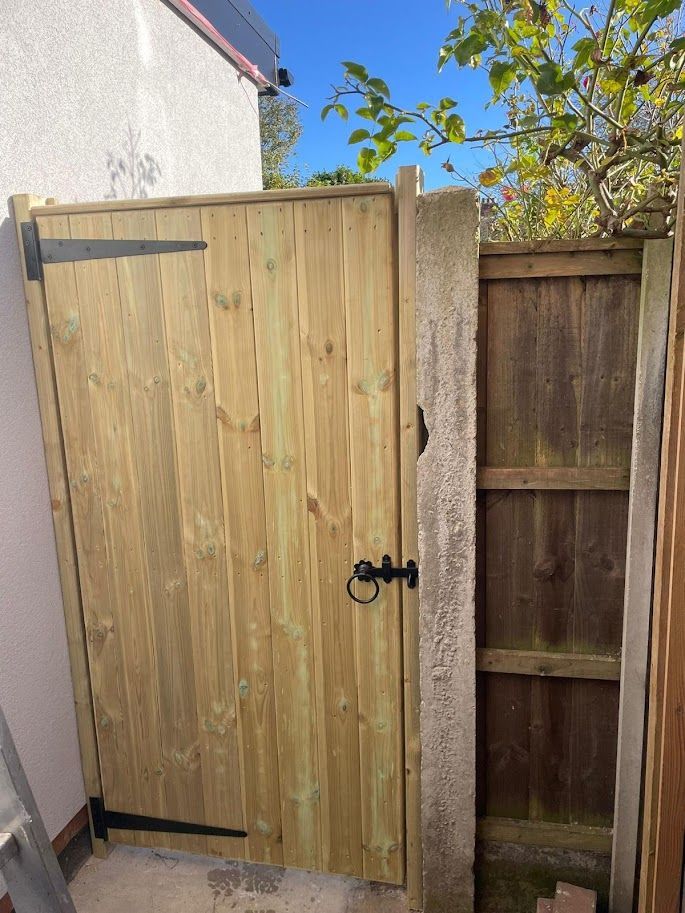
Pressure-treated softwood
Usually pine or spruce, treated under pressure with a preservative so it resists rot and insects. The most common choice for side and garden gates. Any cut ends should be re-treated on site.
-
European redwood
In the UK, ‘redwood’ means Scots pine, not the American redwood tree. It is a good-quality joinery softwood that is normally treated for outdoor use.
-
Larch
A tougher, more resinous softwood than pine, with an attractive grain. It is more naturally durable than pine but can move and leak resin as it weathers.
-
Western red cedar
Light, stable and naturally rot resistant, so it suits large gates where weight matters. It is soft, so it dents more easily than other woods, and weathers to silver grey.
-
Oak
Strong, heavy and long-lasting, with a classic look that weathers to silver if left untreated. Oak contains tannins that react with ordinary steel, so it needs stainless or galvanised fixings to avoid black stains.
-
Iroko and sapele
Tropical hardwoods used for external joinery. Iroko is very durable and stable; sapele looks like mahogany and is best kept finished. Both should come from certified, responsibly managed sources.
-
Accoya
A modified wood: pine treated so it barely swells or shrinks and resists rot to a very high standard. It is one of the most stable gate materials available, at a premium price.
-
What to avoid
Untreated softwood outside, and timber with large loose knots or a lot of sapwood. Both will rot or move far sooner than they should.
Whatever the species, look for timber certified by FSC or PEFC, which shows it comes from responsibly managed forests.
Not sure which timber suits your gate? We will look at the opening and recommend a wood for your budget and the look you want.
What makes a gate last, whatever the wood
- A frame and brace that carry the weight back to the hinges. On a ledged and braced gate, the diagonal brace runs upwards from the bottom hinge so it pushes against the weight rather than letting the gate drop.
- Ledges and braces on the inside face, so the gate is harder to climb from the street side.
- Sloping or chamfered tops to rails and ledges, so rainwater runs off instead of sitting on the timber.
- A clear gap above the ground, so the bottom of the gate does not sit in wet soil or touch the paving.
- Fixings and ironmongery that suit the timber: galvanised, stainless or powder-coated, and stainless for oak.
- Sound posts. A new gate hung on a rotten post will drop within months, so we replace posts where they need it.
-
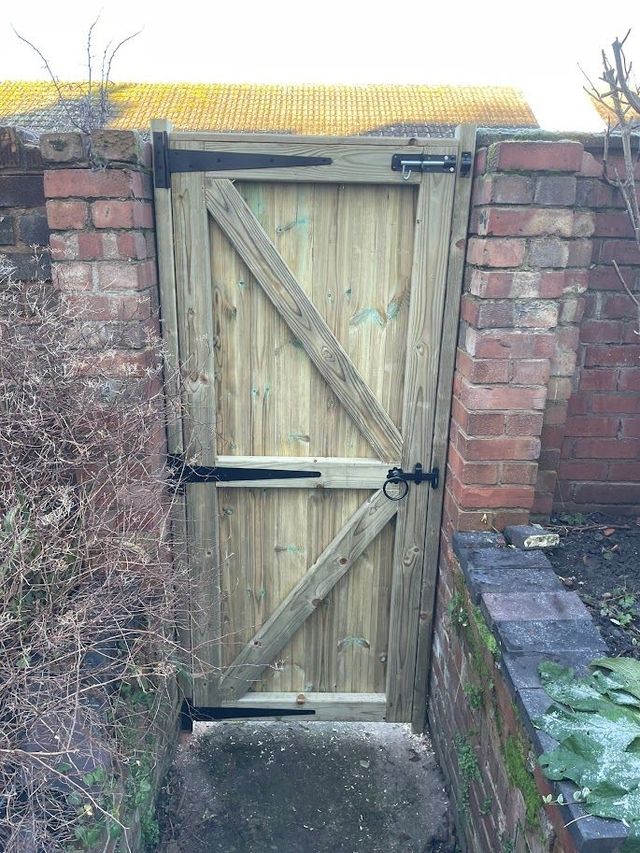
Ledges and braces on the inside face -
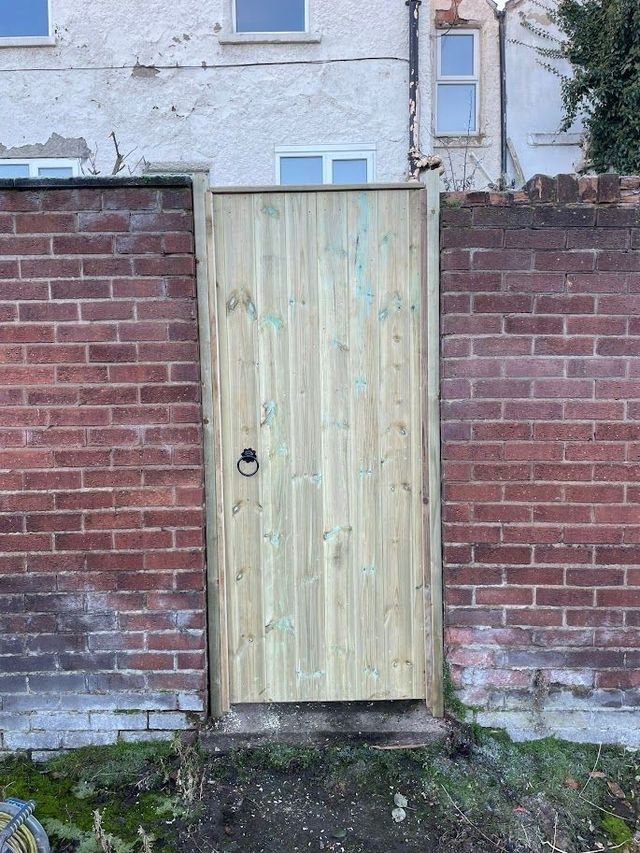
The same gate from the street side -
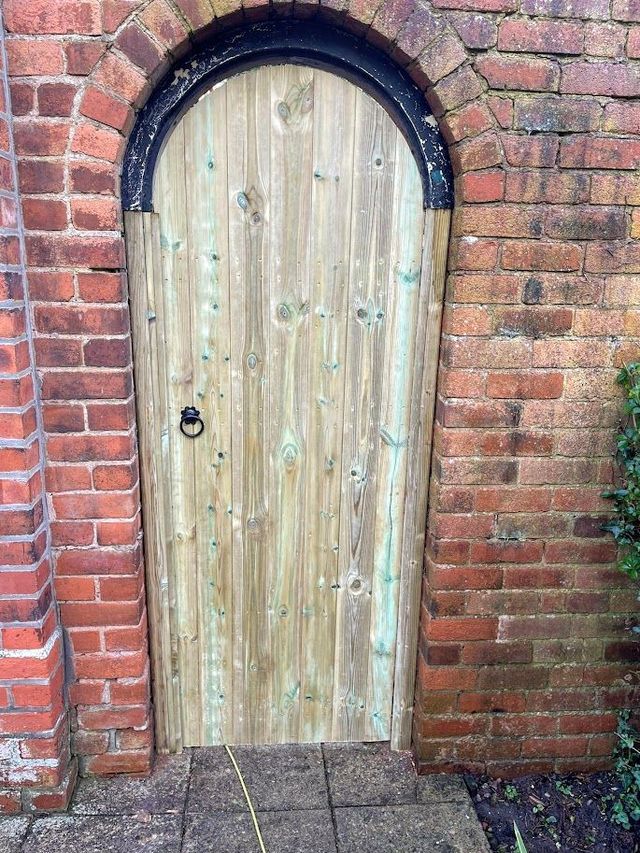
Tongue and groove gate shaped to an arch
Choosing wood for driveway gates
Driveway gates are bigger and heavier, and spend their lives exposed to the weather and the wind. Weight matters more here: a pair of oak gates needs strong posts or brick piers and heavy-duty hinges, while cedar or Accoya keeps the weight down. Stability matters too, especially if the gates will be automated, because a gate that swells and shrinks with the seasons will catch and strain the motor.
For a painted driveway gate, a stable timber such as Accoya or a good-quality treated redwood gives the paint the best chance. For a natural look, oak or iroko left to weather or oiled each year are long-lasting choices.
Finishes and upkeep
-
Leave to weather
Oak, cedar and treated softwood can be left untreated to fade to silver grey. The look is natural and the upkeep is minimal, though the surface will check and roughen over time.
-
Stain or oil
A coloured stain or exterior oil keeps the colour and slows down weathering. Expect to re-coat every few years, more often on south-facing gates.
-
Paint
Gives the most protection and the widest choice of colour, but needs the most care to keep looking smart. New pressure-treated timber should be left to dry out before painting.
Once a year, check the hinges and latch, tighten any loose fixings, clear soil and leaves from the bottom of the gate, and touch up any bare or damaged areas before water gets in.
Gate timber questions
What is the best wood for a garden gate?
For most garden gates, pressure-treated softwood gives the best value. If you want a longer life with less maintenance, choose a durable hardwood such as oak or iroko, or a modified timber such as Accoya.
What is the best wood for driveway gates?
It depends on the look and the budget. Oak and iroko are strong and long-lasting, cedar keeps the weight down on wide gates, and Accoya is the most stable choice, which helps if the gates will be automated or painted.
Does an oak gate need treating?
Not necessarily. Oak can be left to weather to a silver grey. If you want to keep its warm colour, it needs an exterior oil every year or so. Always use stainless or galvanised fixings with oak.
Can you paint a pressure-treated gate?
Yes, but new treated timber should be left to dry out first, and you should use a paint or stain made for exterior timber.
How much does a new wooden garden gate cost?
A new garden or side gate, supplied and fitted, typically costs £350 to £500, depending on the style, the timber and the fitting. Hardwood gates and driveway gates are priced after we have measured up.
Keep reading
More on wooden gates
Get a quote for a new gate
WhatsApp us a photo of the gateway, call 01332 215505 or send an enquiry. We will measure up, recommend the right timber and send a written quote.


